The Vertical Farming Marketplace.
A community-driven platform connecting vertical farming, local commerce, and measurable climate impact
Scope
Duration
Year
/
Challenge
Sustainable food systems lacked a scalable, user-friendly marketplace
Vertical farming offers clear advantages over conventional agriculture - reduced CO₂ emissions, lower water usage, and local production. Yet despite its potential, the ecosystem remained fragmented. Consumers struggled to access vertical farming produce, small growers lacked visibility, and surplus food often went to waste.
Restaurants, private individuals, and large vertical farming operators operated in silos, with no shared digital infrastructure to connect supply, demand, and impact. At the same time, sustainability benefits were largely invisible, making it difficult for users to understand or value the positive environmental effects of their consumption choices.
The challenge was to create a single platform that could serve individuals, restaurants, and enterprise-scale producers - while remaining simple, transparent, and scalable.
/
Solution
A unified marketplace that turns sustainable behavior into everyday action
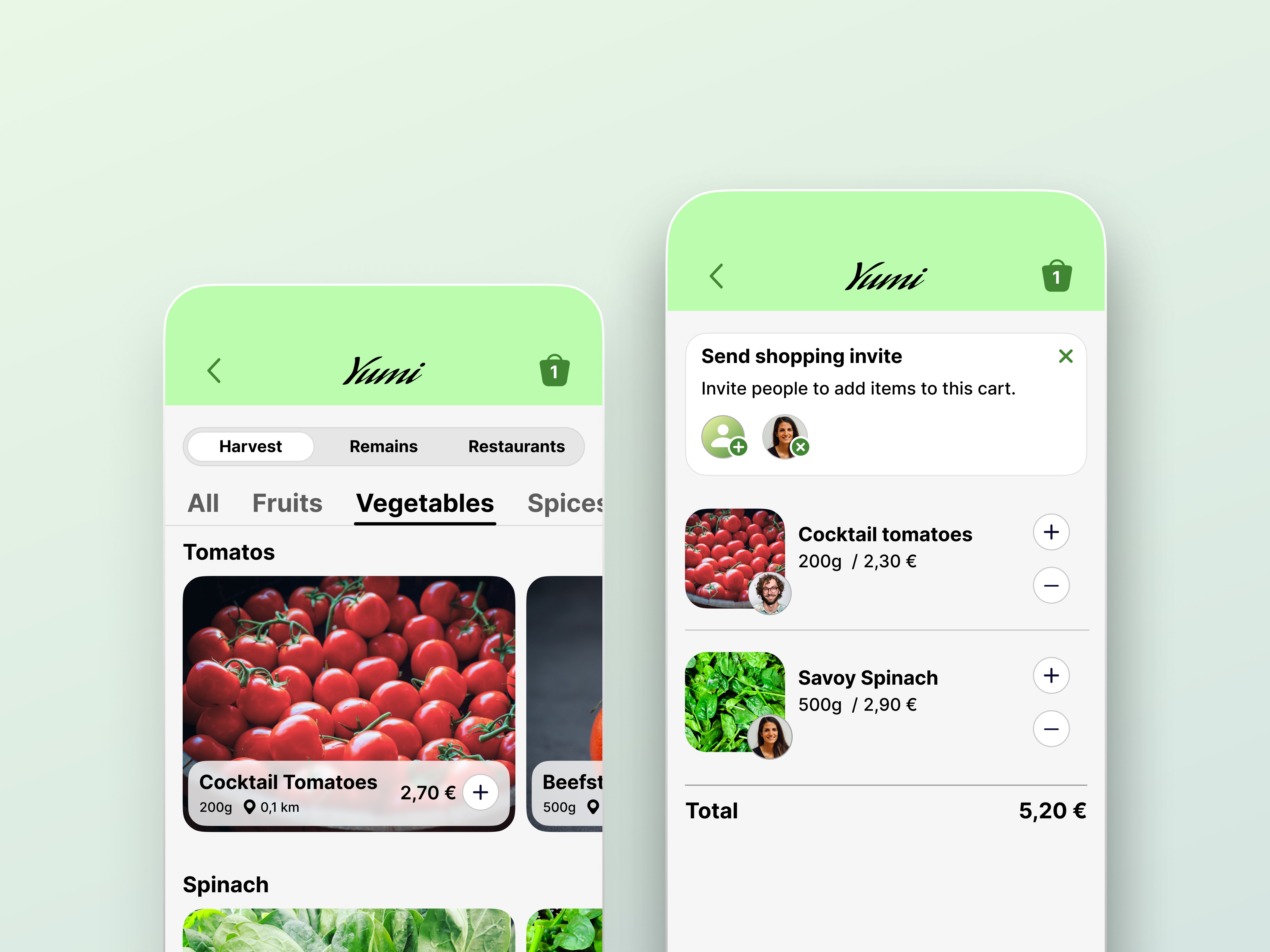
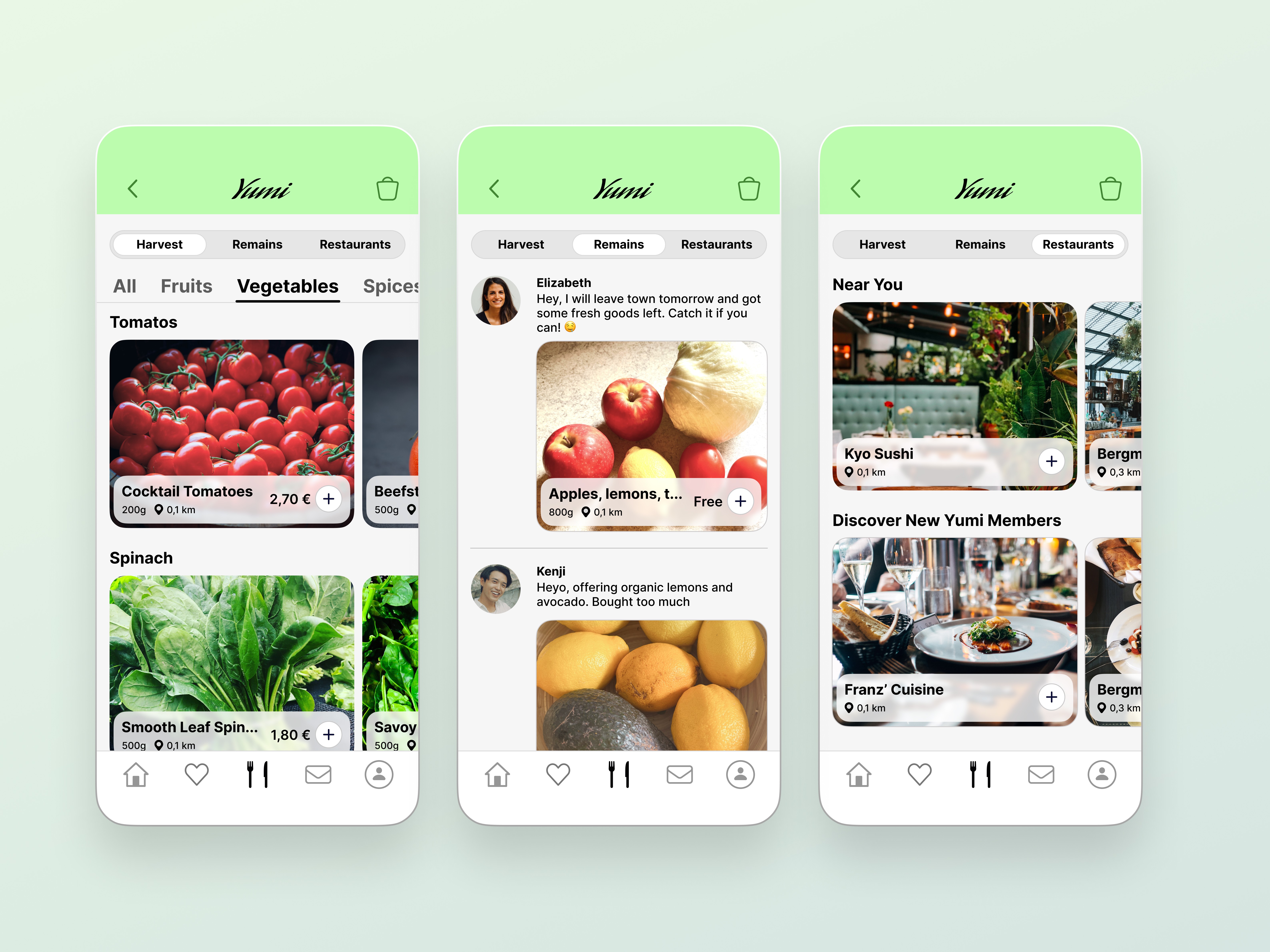
I designed a platform that brings all participants of the vertical farming ecosystem together in one intuitive experience. Users can seamlessly switch between roles - shopper, private provider, farmer, or restaurant - without friction.
Private users can sell surplus food or self-grown produce, restaurants can offer vertical-farming-based dishes and ingredients, and professional vertical farming companies can distribute at scale. Clear navigation and modular views allow each user group to focus on what matters most to them.
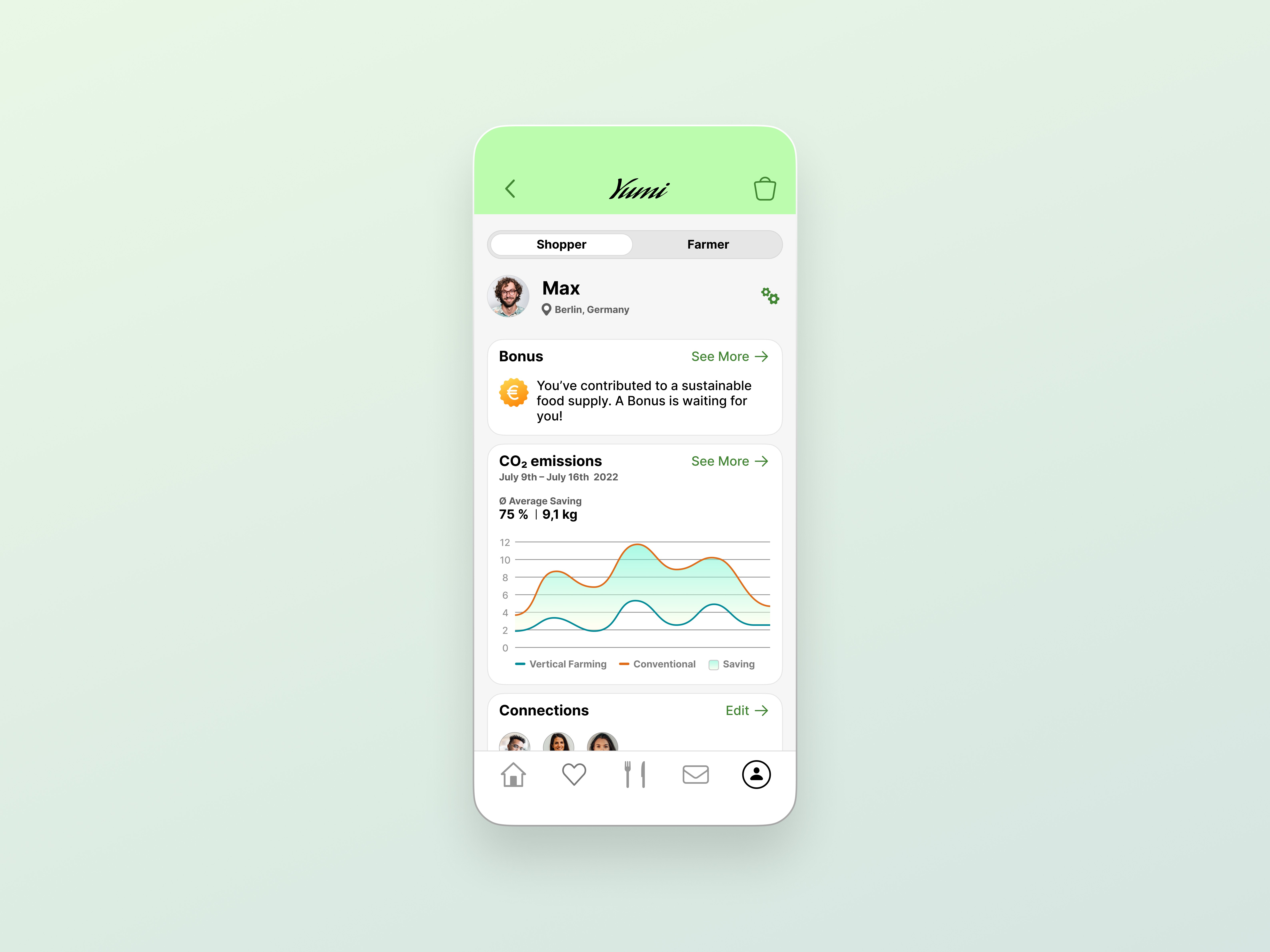
A core feature of the platform is impact transparency: users can track their personal CO₂ savings based on their consumption, compared to conventional farming methods. This transforms sustainability from an abstract concept into a tangible, motivating metric - embedded directly into the user experience.
/
Conclusion
Turning local food ecosystems into a scalable, data-driven platform
Yumi demonstrates how UX-driven product strategy can unlock the full potential of sustainable food systems. By combining marketplace mechanics, community participation, and real-time environmental feedback, the platform reduces food waste, strengthens local supply chains, and makes climate impact visible and actionable.
The result is a flexible foundation that scales from private households to enterprise vertical farming operations - supporting growth, transparency, and long-term sustainability without adding operational complexity.
Latest Projects.
A curated selection of projects that reflect our commitment to simplicity and purposeful design.